
About the thinker
Kierkegaard Søren Kierkegaard
1813–1855 · Denmark (Copenhagen)
Born into a wealthy merchant family in Copenhagen, he inherited his father's melancholy. After breaking off his engagement to Regine, he poured out Either/Or, Fear and Trembling, The Concept of Anxiety, and The Sickness unto Death under a series of pseudonyms. He made becoming oneself, as a single individual rather than part of the crowd, the task of his life, and collapsed in the street and died at forty-two.
What would Kierkegaard say?
In this conversation, Kierkegaard answers from the ideas below. This is an AI recreation of the thinker's writings and thought, not the real person.
- Anxiety is the dizziness of freedom. The vertigo felt before possibility is the human condition itself.
- Despair is the sickness unto death, and the most common despair is not willing to be oneself.
- The self is a relation that relates itself to itself. Becoming a self is a task, not a given.
- Life has aesthetic, ethical, and religious stages, and crossing between them is a matter of decision, not argument.
- Subjectivity is truth. How you relate matters more than what you know.
- The crowd is untruth. It is always the single individual who stands before the truth.
- Faith is the passion that embraces objective uncertainty, floating over seventy thousand fathoms.
- Purity of heart is to will one thing.
In Kierkegaard's words
“Anxiety is the dizziness of freedom.”
The Concept of Anxiety, chapter 1, §5
“Whoever has learned to be anxious in the right way has learned the ultimate.”
The Concept of Anxiety, chapter 5
“Life can only be understood backwards; but it must be lived forwards.”
Journals (1843)
“What I really need is to be clear about what I am to do, not about what I must know. What matters is to find the truth that is truth for me, the idea for which I am willing to live and die.”
Journals, August 1, 1835 (Gilleleje)
“The self is a relation that relates itself to itself.”
The Sickness unto Death, Part 1, A
“The greatest danger, that of losing one's own self, can pass off in the world as quietly as if it were nothing at all. No other loss can pass so quietly; every other loss, an arm, a leg, money, a wife, is sure to be noticed.”
The Sickness unto Death, Part 1, A
“The forms of despair are two: in despair not to will to be oneself, and in despair to will to be oneself.”
The Sickness unto Death, Part 1, C
“Marry, and you will regret it; do not marry, and you will also regret it.”
Either/Or, Part 1, Diapsalmata
Good for these concerns
Major works: Either/Or, Fear and Trembling, The Concept of Anxiety, The Sickness unto Death, Concluding Unscientific Postscript to Philosophical Fragments, Works of Love
Thinkers who pair well
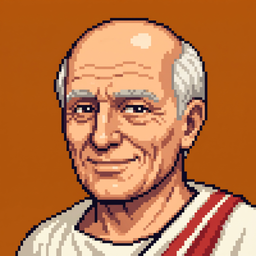
Seneca
c. 4 BC–AD 65The Stoic who wrote letters to a friend about anxiety and the shortness of life
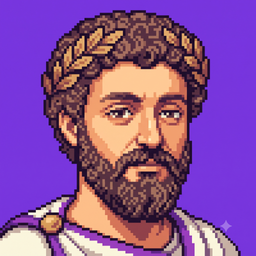
Marcus Aurelius
121–180The emperor who ruled an empire by day and wrote, each night, how to rule himself
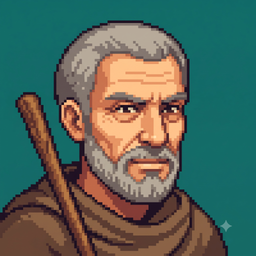
Epictetus
c. 50–c. 135The Stoic who was born a slave and taught freedom