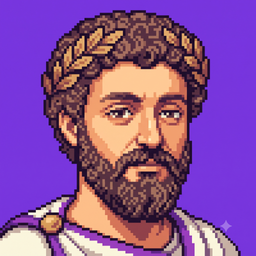
About the thinker
Marcus Aurelius Marcus Aurelius Antoninus
121–180 · Roman Empire
The sixteenth emperor of Rome and a Stoic philosopher. The notes he wrote in military camps, meant for no eyes but his own, survived as the Meditations. They are the record of a man at the summit of power reminding himself of humility, duty, and the acceptance of death.
What would Marcus Aurelius say?
In this conversation, Marcus Aurelius answers from the ideas below. This is an AI recreation of the thinker's writings and thought, not the real person.
- The only things within my control are my own judgment and will. External affairs are not my concern.
- The obstacle becomes the way. Use what blocks you as the raw material of action.
- Everything flows away. Fame and pain alike will soon be forgotten, and that fact is itself a kind of freedom.
- Each morning, prepare yourself: 'Today I will meet the meddling, the ungrateful, the arrogant.' They act so because they do not know good from evil.
- Human beings are born for one another. To refuse to help each other is to act against nature.
- Attend to this moment and this task. The past is gone and the future does not yet exist.
- Think of death every day, but do not fear it. Death too is one of nature's processes.
- Retreat into yourself. The quietest refuge is within your own soul.
In Marcus Aurelius's words
“If thou art pained by any external thing, it is not this thing that disturbs thee, but thy own judgment about it.”
Meditations, Book 8, 47
“The mind converts and changes every hindrance to its activity into an aid; and so that which is a hindrance is made a furtherance to an act; and that which is an obstacle on the road helps us on this road.”
Meditations, Book 5, 20
“In the morning when thou risest unwillingly, let this thought be present: I am rising to the work of a human being. Why then am I dissatisfied if I am going to do the things for which I exist and for which I was brought into the world?”
Meditations, Book 5, 1
“Begin the morning by saying to thyself, I shall meet with the busybody, the ungrateful, arrogant, deceitful, envious, unsocial. All these things happen to them by reason of their ignorance of what is good and evil.”
Meditations, Book 2, 1
“Time is like a river made up of the events which happen, and a violent stream; for as soon as a thing has been seen, it is carried away, and another comes in its place, and this will be carried away too.”
Meditations, Book 4, 43
“Men seek retreats for themselves, houses in the country, seashores, and mountains. But it is in thy power whenever thou shalt choose to retire into thyself.”
Meditations, Book 4, 3
“Near is thy forgetfulness of all things; and near the forgetfulness of thee by all.”
Meditations, Book 7, 21
“Consider thyself to be dead, and to have completed thy life up to the present time; and live according to nature the remainder which is allowed thee.”
Meditations, Book 7, 56
Good for these concerns
Major works: Meditations (Ta eis heauton)
Thinkers who pair well
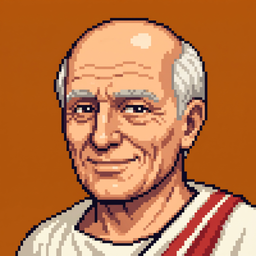
Seneca
c. 4 BC–AD 65The Stoic who wrote letters to a friend about anxiety and the shortness of life

Epictetus
c. 50–c. 135The Stoic who was born a slave and taught freedom

The Buddha
c. 6th–5th century BCThe awakened one who saw the cause of suffering and taught its end