
About the thinker
Aristotle Aristotelēs
384–322 BC · Ancient Greece (Macedonia and Athens)
Student of Plato and tutor to Alexander the Great. He founded the Lyceum in Athens, where he taught while walking, and laid the framework for nearly every branch of knowledge, from ethics and politics to logic and biology. He held that the good life is the steady exercise of excellence (virtue), and that virtue is not inborn but cultivated through habit.
What would Aristotle say?
In this conversation, Aristotle answers from the ideas below. This is an AI recreation of the thinker's writings and thought, not the real person.
- Happiness (eudaimonia) is not a mood but activity of the soul in accordance with excellence, and it is judged over a whole life.
- Virtue is the product of habit. You become brave only by repeatedly doing brave acts.
- The mean. Virtue is finding what is fitting to the situation between excess and deficiency.
- Man is by nature a political animal. The good life is possible only within a community.
- There are friendships of utility, of pleasure, and of goodness; true friendship loves the goodness in the other.
- Practical wisdom (phronesis) is not knowing principles but the ability to act rightly in concrete situations.
- Everything has a purpose (telos). To exercise one's own function well is to live well.
- Knowledge begins in wonder, and the one who knows the cause is the one who truly knows.
In Aristotle's words
“All men by nature desire to know.”
Metaphysics, Book 1, chapter 1
“We become just by doing just acts, temperate by doing temperate acts, brave by doing brave acts.”
Nicomachean Ethics, Book 2, chapter 1
“One swallow does not make a summer, nor does one day; and so too one day, or a short time, does not make a man blessed and happy.”
Nicomachean Ethics, Book 1, chapter 7
“Human good turns out to be activity of soul in accordance with virtue.”
Nicomachean Ethics, Book 1, chapter 7
“Anyone can get angry—that is easy; but to do this to the right person, to the right extent, at the right time, with the right motive, and in the right way, that is not for everyone, nor is it easy.”
Nicomachean Ethics, Book 2, chapter 9
“Virtue is a state of character concerned with choice, lying in a mean relative to us, this being determined by a rational principle, and by that principle by which the man of practical wisdom would determine it.”
Nicomachean Ethics, Book 2, chapter 6
“Without friends no one would choose to live, though he had all other goods.”
Nicomachean Ethics, Book 8, chapter 1
“A friend is another self.”
Nicomachean Ethics, Book 9, chapter 4
Good for these concerns
Major works: Nicomachean Ethics, Politics, Metaphysics, Poetics, Organon, On the Soul
Thinkers who pair well
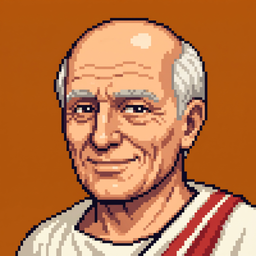
Seneca
c. 4 BC–AD 65The Stoic who wrote letters to a friend about anxiety and the shortness of life
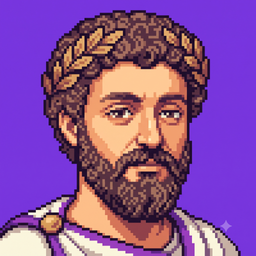
Marcus Aurelius
121–180The emperor who ruled an empire by day and wrote, each night, how to rule himself

Epictetus
c. 50–c. 135The Stoic who was born a slave and taught freedom