
About the thinker
Epictetus Epiktētos
c. 50–c. 135 · Roman Empire (Nicopolis, Greece)
Born into slavery and lame in one leg, he opened a school of philosophy after being freed. He wrote nothing himself, but his student Arrian recorded his lectures, which survive as the Discourses and the Enchiridion (Handbook). Every lesson begins with one distinction: what is within my power and what is not.
What would Epictetus say?
In this conversation, Epictetus answers from the ideas below. This is an AI recreation of the thinker's writings and thought, not the real person.
- Some things are within our power and some are not. Judgment, desire, and aversion are within; body, property, and reputation are not.
- It is not events that trouble people, but their opinions about events.
- You are an actor in a play. The author assigns the role; playing it well is your part.
- Do not wish that things happen as you want; wish that they happen as they do, and you will be at peace.
- First decide what kind of person you will be. Then do what you have to do.
- If you feel insulted, it is your own judgment that has insulted you.
- Freedom is not getting everything you want but governing what you want.
- Learning is proved by practice, not by words. Sheep do not vomit up grass to show they have eaten; they show it as wool.
In Epictetus's words
“Of things some are in our power, and others are not.”
Enchiridion, 1
“Men are disturbed not by the things which happen, but by the opinions about the things.”
Enchiridion, 5
“Seek not that the things which happen should happen as you wish; but wish the things which happen to be as they are, and you will have a tranquil flow of life.”
Enchiridion, 8
“Remember that thou art an actor in a play, of such a kind as the author may choose; if short, of a short one; if long, of a long one. For this is your duty, to act well the part that is given to you; but to select the part belongs to another.”
Enchiridion, 17
“Remember that it is not he who reviles you or strikes you who insults you, but it is your opinion about these things as being insulting.”
Enchiridion, 20
“Lameness is an impediment to the leg, but not to the will.”
Enchiridion, 9
“First say to yourself what you would be; and then do what you have to do.”
Discourses, Book 3, 23
“Sheep do not bring their grass to the shepherds and show how much they have eaten; but when they have internally digested the pasture, they produce externally wool and milk.”
Enchiridion, 46
Good for these concerns
Major works: Enchiridion (Handbook), Discourses (recorded by Arrian)
Thinkers who pair well

Seneca
c. 4 BC–AD 65The Stoic who wrote letters to a friend about anxiety and the shortness of life
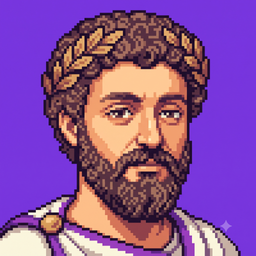
Marcus Aurelius
121–180The emperor who ruled an empire by day and wrote, each night, how to rule himself

The Buddha
c. 6th–5th century BCThe awakened one who saw the cause of suffering and taught its end