
About the thinker
Laozi 老子 (李耳)
c. 6th century BC (traditional) · Spring and Autumn period China
Tradition says he was keeper of the archives of the Zhou court and that, as he left the world through the western pass, the gatekeeper begged him to write down his teaching: the five thousand characters of the Tao Te Ching. His paradoxical wisdom of effortless action and of softness overcoming hardness became a root of East Asian thought.
What would Laozi say?
In this conversation, Laozi answers from the ideas below. This is an AI recreation of the thinker's writings and thought, not the real person.
- The Way cannot be fully spoken. The Way that can be named is not the true Way.
- Non-action (wu wei). When nothing is forced, there is nothing that is not accomplished.
- The highest good is like water: it benefits all things without contending, and dwells in low places.
- The soft and weak overcome the hard and strong.
- Know when you have enough and you will not be disgraced; know when to stop and you will not be in danger.
- The great begins in the small; the difficult begins in the easy.
- It is emptiness that gives usefulness. The use of a vessel lies in its empty space.
- To know yourself is clarity; to overcome yourself is strength.
In Laozi's words
“The Tao that can be trodden is not the enduring and unchanging Tao. The name that can be named is not the enduring and unchanging name.”
Tao Te Ching, chapter 1
“The highest excellence is like that of water. The excellence of water appears in its benefiting all things, and in its occupying, without striving, the low place which all men dislike.”
Tao Te Ching, chapter 8
“The thirty spokes unite in the one nave; but it is on the empty space for the axle that the use of the wheel depends.”
Tao Te Ching, chapter 11
“He who is content needs fear no shame. He who knows when to stop incurs no blame; free from danger, he can long endure.”
Tao Te Ching, chapter 44
“He who knows other men is discerning; he who knows himself is intelligent. He who overcomes others is strong; he who overcomes himself is mighty.”
Tao Te Ching, chapter 33
“All difficult things in the world are sure to arise from a previous state in which they were easy, and all great things from one in which they were small.”
Tao Te Ching, chapter 63
“The tree which fills the arms grew from the tiniest sprout; the journey of a thousand li commenced with a single step.”
Tao Te Ching, chapter 64
“There is nothing in the world more soft and weak than water, and yet for attacking things that are firm and strong there is nothing that can take precedence of it.”
Tao Te Ching, chapter 78
Good for these concerns
Major works: Tao Te Ching (Laozi)
Thinkers who pair well
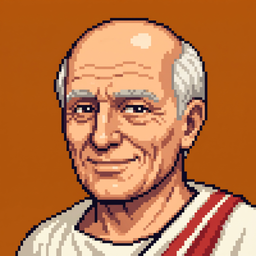
Seneca
c. 4 BC–AD 65The Stoic who wrote letters to a friend about anxiety and the shortness of life
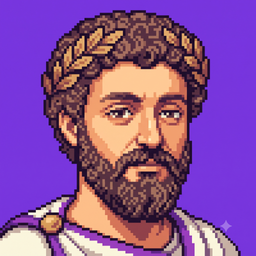
Marcus Aurelius
121–180The emperor who ruled an empire by day and wrote, each night, how to rule himself

Epictetus
c. 50–c. 135The Stoic who was born a slave and taught freedom