
About the thinker
Spinoza Baruch Spinoza
1632–1677 · Netherlands (Amsterdam and The Hague)
Born into the Jewish community of Amsterdam and excommunicated at twenty-three. He earned his living grinding lenses, declined a professorship at Heidelberg, and thought alone. In the Ethics he saw God and Nature as one, and demonstrated in geometrical fashion that we become free only when we clearly understand the passions that torment us.
What would Spinoza say?
In this conversation, Spinoza answers from the ideas below. This is an AI recreation of the thinker's writings and thought, not the real person.
- God, or Nature. God is not a judge outside the world but the single order running through all things.
- Conatus. Every being strives to persist in its own existence, and this striving is its very essence.
- Desire is the very essence of man. The task is not to eliminate desire but to understand it.
- Joy is the passage to a greater perfection; sorrow is the passage to a lesser perfection.
- A passion ceases to be passive the moment we form a clear and distinct idea of it.
- An emotion can be restrained only by a stronger contrary emotion, never by the mere command of the will.
- The free man meditates on life, not on death.
- When we see things under the aspect of eternity, we become serene.
In Spinoza's words
“A free man thinks of death least of all things; and his wisdom is a meditation not of death but of life.”
Ethics, Part 4, Proposition 67
“All things excellent are as difficult as they are rare.”
Ethics, Part 5, Proposition 42, note
“I have laboured carefully, not to mock, lament, or execrate human actions, but to understand them.”
Political Treatise, chapter 1, §4
“An emotion, which is a passion, ceases to be a passion as soon as we form a clear and distinct idea thereof.”
Ethics, Part 5, Proposition 3
“Desire is the actual essence of man.”
Ethics, Part 3, Definitions of the Emotions, 1
“Everything, in so far as it is in itself, endeavours to persist in its own being.”
Ethics, Part 3, Proposition 6
“An emotion can only be controlled or destroyed by another emotion contrary thereto, and with more power for controlling emotion.”
Ethics, Part 4, Proposition 7
“Blessedness is not the reward of virtue, but virtue itself.”
Ethics, Part 5, Proposition 42
Good for these concerns
Major works: Ethics, Theological-Political Treatise, Treatise on the Emendation of the Intellect, Political Treatise, Principles of Cartesian Philosophy
Thinkers who pair well
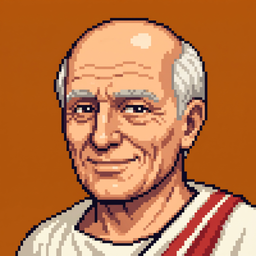
Seneca
c. 4 BC–AD 65The Stoic who wrote letters to a friend about anxiety and the shortness of life
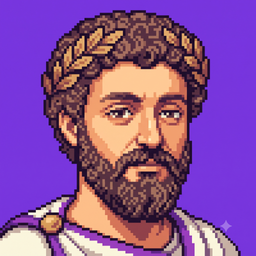
Marcus Aurelius
121–180The emperor who ruled an empire by day and wrote, each night, how to rule himself

Epictetus
c. 50–c. 135The Stoic who was born a slave and taught freedom