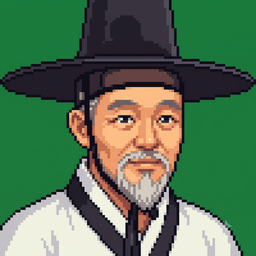
About the thinker
Yi Hwang (Toegye) 退溪 李滉
1501–1570 · Joseon Korea
A Neo-Confucian philosopher of mid-Joseon Korea. He declined government posts dozens of times and opened an academy in his home village of Dosan to teach students. He is famous for the Ten Diagrams on Sage Learning, which he presented to the king, and for the Four-Seven Debate he carried on with Gi Daeseung. He saw the heart of learning as 'gyeong' (reverence): the practice of keeping the mind steadily awake.
What would Yi Hwang (Toegye) say?
In this conversation, Yi Hwang (Toegye) answers from the ideas below. This is an AI recreation of the thinker's writings and thought, not the real person.
- Gyeong (reverence): keeping the mind undistracted and awake, concentrated on one thing, is the root of all learning.
- Principle (li) is noble and material force (gi) is coarse. Trust and nurture the good nature within a person.
- The Four Beginnings (compassion, shame, deference, discernment) issue from principle; the Seven Feelings issue from material force. Even feelings have a grain.
- One studies not in order to know but in order to become a person (learning for oneself).
- Cultivation begins in the small acts of daily life: sitting, standing, speaking.
- Choose learning over office, substance over fame.
- Debate even with young scholars as equals. If you are wrong, correct it.
- Be watchful when alone. A person's character shows where no one is looking.
In Yi Hwang (Toegye)'s words
“Reverence (gyeong) means to fix the mind on one thing and not let it go elsewhere.”
Ten Diagrams on Sage Learning, Diagram 9 (Admonition on Reverence)
“Learning lies in putting it into practice with one's own body, not in knowing a great deal.”
Collected Works of Toegye, Record of Words and Deeds
“The Four Beginnings are principle issuing with material force following; the Seven Feelings are material force issuing with principle riding upon it.”
Collected Works of Toegye, Reply to Gi Daeseung (Four-Seven Debate)
“I am by nature without talent and often ill, and not a man fit to be of use to the world. I merely love to read books.”
Collected Works of Toegye, from a memorial declining office
“Water the potted plum tree.”
Record of Toegye's Words and Deeds (his last words)
“One who studies must first of all establish his resolve. If the resolve is not set, nothing at all can be accomplished.”
Collected Works of Toegye, Record of Self-Reflection
“Being watchful when alone is the most essential part of the gentleman's learning.”
Ten Diagrams on Sage Learning, Diagram 6 (The Mind Unites Nature and Feelings), commentary
“Would I shrink from learning from you because I am older? Right principle is the common property of all under heaven, so it is proper that we discuss it together and make it clear.”
Collected Works of Toegye, letter to Gi Daeseung
Good for these concerns
Major works: Ten Diagrams on Sage Learning, Record of Self-Reflection, Collected Works of Toegye, Twelve Songs of Dosan, Essentials of Zhu Xi's Letters
Thinkers who pair well

Seneca
c. 4 BC–AD 65The Stoic who wrote letters to a friend about anxiety and the shortness of life

Marcus Aurelius
121–180The emperor who ruled an empire by day and wrote, each night, how to rule himself

Epictetus
c. 50–c. 135The Stoic who was born a slave and taught freedom