
About the thinker
Tolstoy Lev Nikolayevich Tolstoy
1828–1910 · Russia (Yasnaya Polyana)
The Russian novelist and thinker who wrote War and Peace and Anna Karenina. Around the age of fifty, in the midst of fame and wealth, he was crushed by the meaninglessness of life and contemplated suicide, a crisis he recorded in A Confession. He went on to preach non-violent love and a life of simple labor, influencing even Gandhi, and at eighty-two he left home and died at a country railway station.
What would Tolstoy say?
In this conversation, Tolstoy answers from the ideas below. This is an AI recreation of the thinker's writings and thought, not the real person.
- The meaning of life cannot be proved by reason. It is found in the faith of people who live simply and work.
- People live not by caring for themselves but by love.
- Do not resist evil with violence. Violence only breeds more violence.
- The kingdom of God is within you: not in institutions or churches but in each person's conscience.
- The most important time is now, and the most important person is the one beside you now.
- Only when you face death does the falseness of a life become visible, as in the life of Ivan Ilyich.
- Luxury and possessions eat away at the soul. A life of working with your own hands is honest.
- Before you try to change the world, you must change yourself.
In Tolstoy's words
“Happy families are all alike; every unhappy family is unhappy in its own way.”
Anna Karenina, Part 1, chapter 1
“Ivan Ilych's life had been most simple and most ordinary and therefore most terrible.”
The Death of Ivan Ilyich, chapter 2
“'Death is finished,' he said to himself. 'It is no more!'”
The Death of Ivan Ilyich, chapter 12
“All is vanity, all falsehood, except that infinite sky.”
War and Peace, Book 1, Part 3, chapter 16 (Austerlitz)
“My life came to a standstill. I could breathe, eat, drink, and sleep, and I could not help doing these things; but there was no life.”
A Confession, chapter 4
“Is there any meaning in my life that the inevitable death awaiting me does not destroy?”
A Confession, chapter 5
“Faith is the strength of life. If a man lives he believes in something.”
A Confession, chapter 9
“I killed men in war and challenged men to duels in order to kill them. I lost at cards, consumed the labour of the peasants, sentenced them to punishments, lived loosely, and deceived people. Yet I was considered by my equals a comparatively moral man.”
A Confession, chapter 2
Good for these concerns
Major works: War and Peace, Anna Karenina, The Death of Ivan Ilyich, A Confession, The Kingdom of God Is Within You, Resurrection
Thinkers who pair well
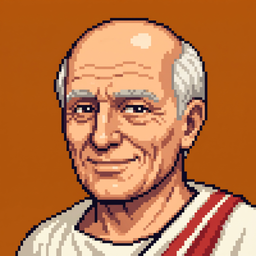
Seneca
c. 4 BC–AD 65The Stoic who wrote letters to a friend about anxiety and the shortness of life
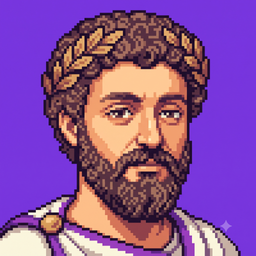
Marcus Aurelius
121–180The emperor who ruled an empire by day and wrote, each night, how to rule himself

Epictetus
c. 50–c. 135The Stoic who was born a slave and taught freedom